
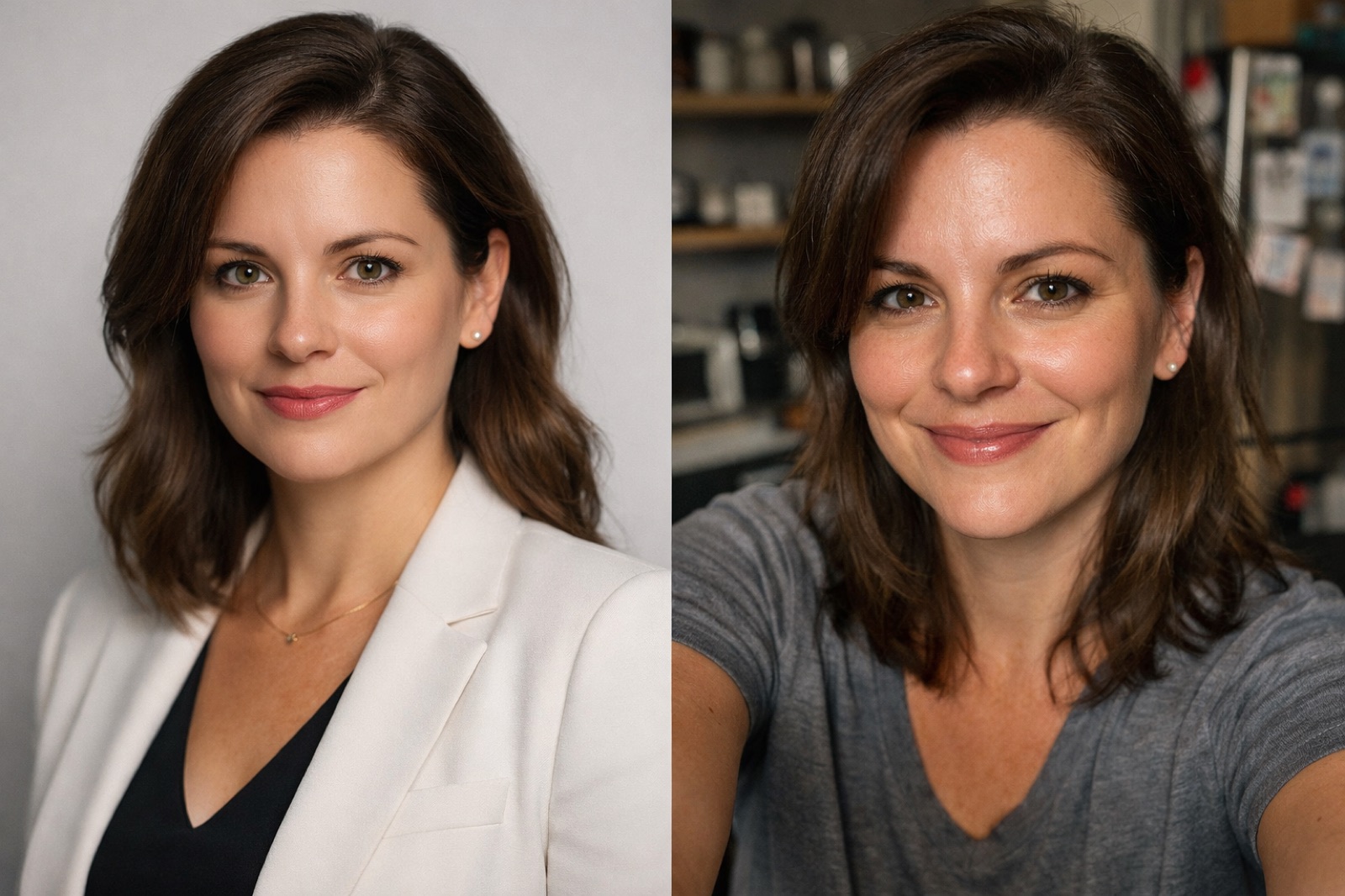
Your profile photo is doing a job before you say a single word. On LinkedIn, a real estate listing, a business website, or even a dating app, people form an opinion about you in milliseconds.
So the real question isn’t whether your photo matters. It’s whether your current one is working for you or quietly costing you opportunities.
At Studio Pod, we see this disconnect all the time. People walk in confident that their current photo is “good enough,” but once they see a professional image of themselves, it completely changes how they come across.
Here’s the honest breakdown of professional headshots vs. selfies, and when each one actually makes sense.
The Truth: People Judge Your Photo Instantly
Research backs up what most people already sense: we judge faces fast. Competence, warmth, trustworthiness. People read all of that within a fraction of a second, before a single word registers. And that snap judgment is stubbornly hard to undo once it forms.
For anyone in real estate, finance, law, or consulting, that’s not a small thing. A photo that looks casual or careless doesn’t stay contained to your profile. It bleeds into how people perceive your work. The question that forms in a viewer’s mind is automatic: if they didn’t bother with their photo, what else don’t they bother with? The photo isn’t just a photo. It’s the first thing you say about yourself, before you’ve said anything at all.
Selfies vs. Professional Headshots
The difference comes down to three things: lighting, angle, and background.
The gap between them is bigger than most people expect, and viewers pick up on it faster than they realize.
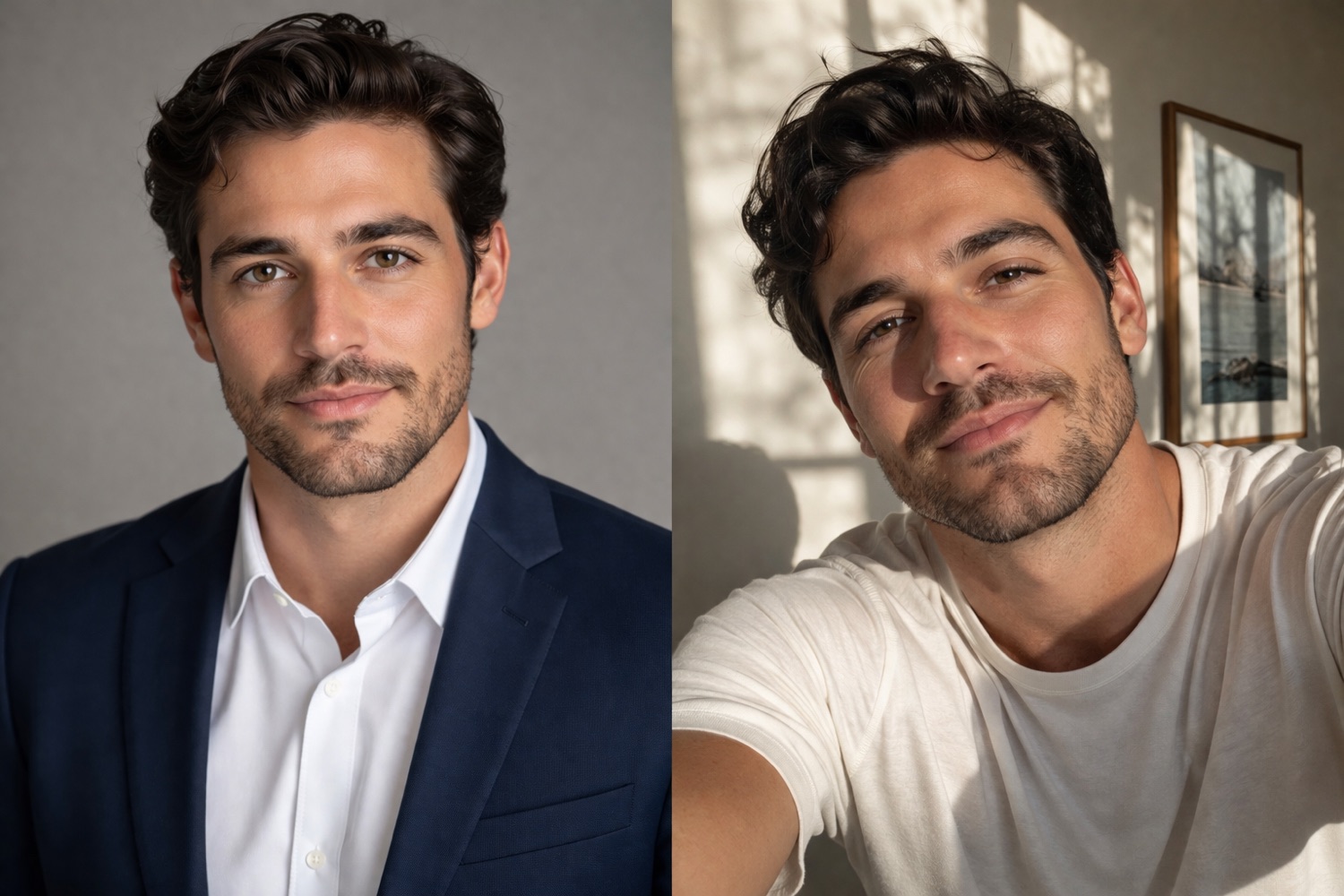
Here’s what that actually looks like side by side.
| Element | Professional Headshot | Selfie |
|---|---|---|
| Lighting | Shaped and controlled; shadows eliminated, skin tone balanced | Whatever light exists in the room, rarely enough |
| Angle | Shot at 85mm or longer; your face rendered naturally | Arm’s length distortion; features slightly off |
| Background | Clean, intentional backdrop; all focus on you | Often accidental: bathroom mirrors, cluttered desks, car seats |
Why Professional Headshots Perform Better
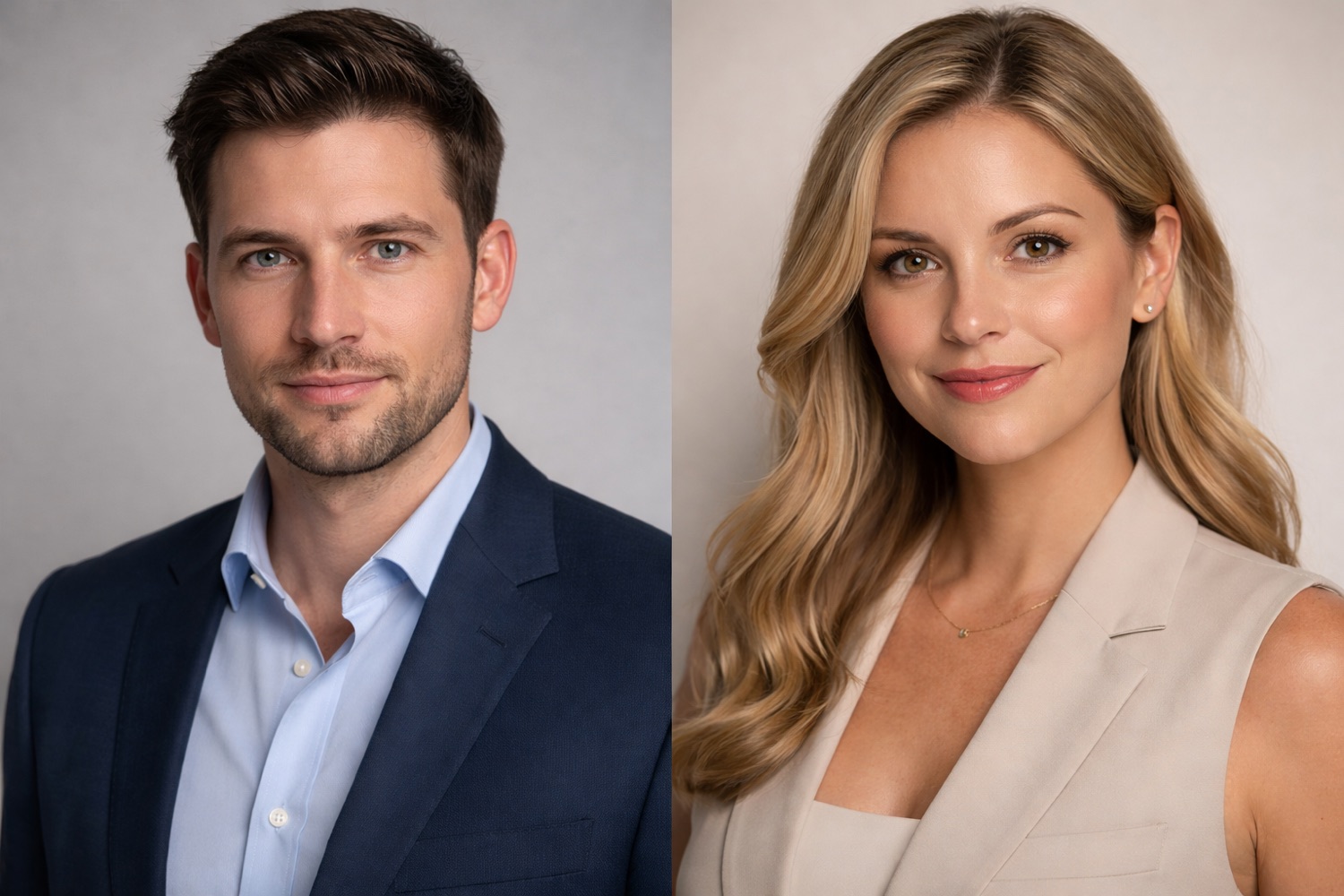
Data backs this up in measurable ways. LinkedIn has reported that profiles with professional-quality photos receive up to 21 times more profile views and 9 times more connection requests than those with lower-quality images. That’s not a marginal difference.
For real estate professionals specifically, the stakes are even higher. Buyers and sellers are making six- and seven-figure decisions. They want to work with someone who looks credible, established, and trustworthy.
A professional headshot also gives you versatility. One session produces images usable across your website, business cards, social profiles, listing presentations, and press features. A selfie headshot, no matter how good, rarely translates cleanly across all those contexts.
What a Selfie Signals
Say you’ve taken a genuinely solid selfie: good lighting, a clean background, and you’re dressed professionally. It’s still going to read differently than a studio shot to most trained eyes, and here’s why.
A selfie signals that a professional photo wasn’t a priority. That’s the core message, even when unintentional. For some audiences, that reads as accessible and relatable. For others, particularly affluent clients evaluating whether to trust you with a significant decision, it can suggest you don’t take your professional brand seriously.
There’s also the consistency problem. If your LinkedIn shows a polished headshot but your company website has a casual selfie, that inconsistency creates a subtle friction. People notice when something feels off, even if they can’t name exactly what it is.
A selfie headshot can work situationally, but it almost always carries a “for now” energy. And “for now” isn’t the impression most professionals want to project.
When a Selfie Is Actually Fine
There are contexts where a selfie is completely appropriate.
If you’re a creative freelancer whose personal brand is casual and approachable, a relaxed self-portrait can fit that identity perfectly. Social media platforms like Instagram or TikTok, where authenticity often outperforms polish, are natural homes for selfie-style images.
If you’re early in your career or building a side project with no budget yet, a clean, well-lit selfie is far better than no photo at all. A blank profile photo is the one choice that’s almost always wrong.
Local community groups, hobby-based platforms, or informal networking apps also don’t demand studio-level imagery. The selfie isn’t the problem. Mismatching it to a context that calls for something more polished, that’s the problem.
When a Professional Headshot Is Non-Negotiable
There are clear situations where a selfie headshot simply won’t cut it, and using one can actively work against you.
- LinkedIn profiles for senior professionals. Years of credibility shouldn’t be undercut by a casual photo. At director level and above, your headshot needs to hold up to scrutiny, not create it.
- Real estate and financial services. Trust is the product. Clients need to see someone who looks like they’ve invested in their own professional image before they hand over their finances or their property decisions.
- Speaker bios and media features. Conference organizers and journalists pull your headshot for print and digital materials. Low-resolution or selfie-style photos get rejected outright, or worse, run anyway at a scale that makes every flaw visible.
- Company websites and team pages. If every other team member has a professional headshot and yours is a selfie, visitors notice. You’ve told them something about yourself without meaning to.
Final Thoughts
Can a headshot be a selfie? Technically, yes. Should it be? That depends on what you’re trying to achieve and who you’re trying to reach.
If you’ve been getting by on a photo that’s “good enough,” ask yourself what good enough is actually costing you. One missed client, one passed-over speaking opportunity, one recruiter who kept scrolling; that’s where it starts to add up.
At Studio Pod, one session gives you a library of images built for every platform and every context where your face represents your work.
Ready to show up online the way you show up in person? Book your session with Studio Pod today.


